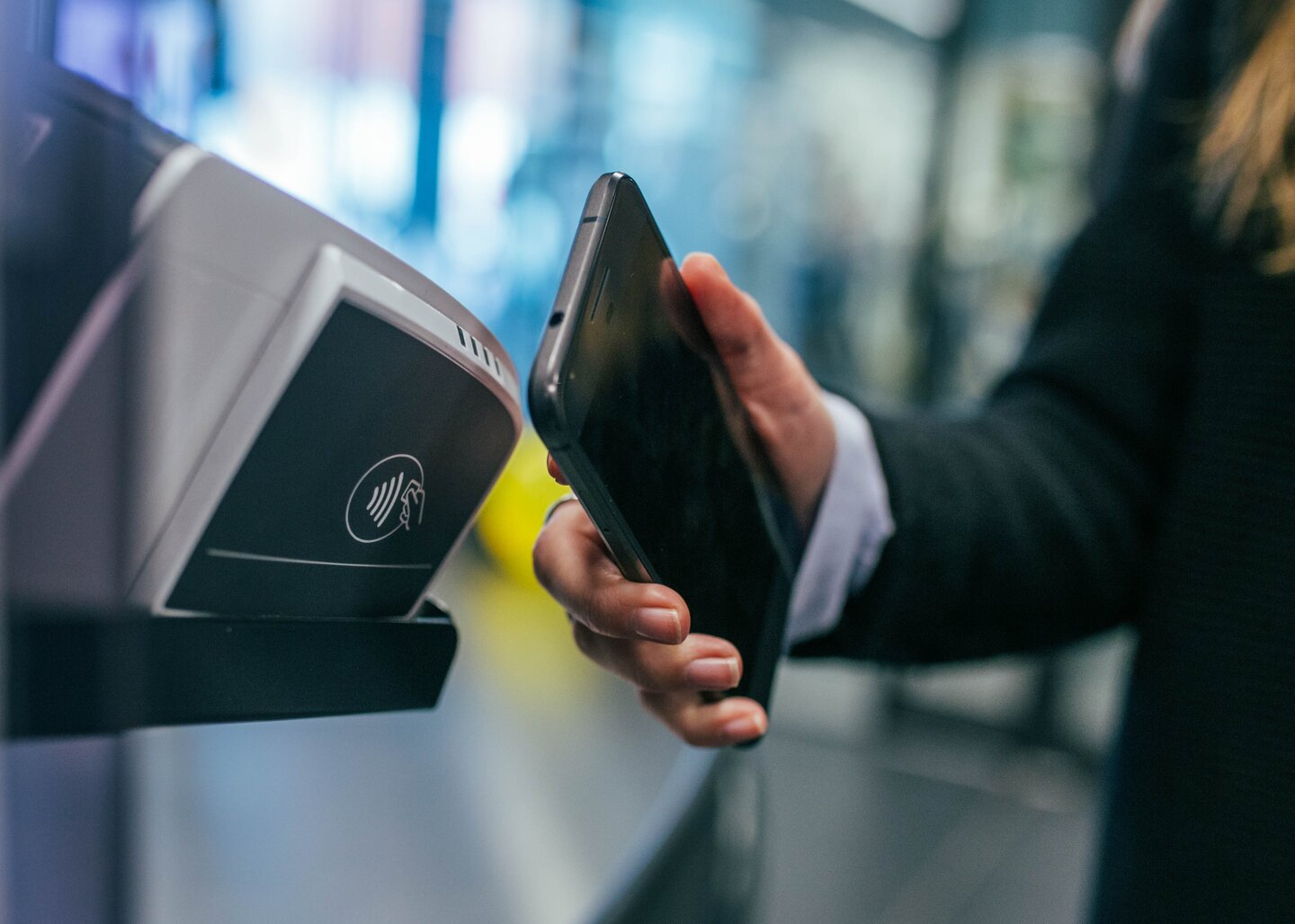
The B2B payments landscape is ever-changing. Stay up to date on B2B payments so you can implement cost effective B2B payment processing for your business.
Business to business marketing encompasses various techniques to help your company stand out. In this blog, you'll learn what is B2B marketing and its basics.
Read on to learn what is B2B sales (business to business sales), what B2B sales meaning is, and why it's important for business owners to focus on B2B sales.
What is a B2B company? We're glad you asked. In the B2B business model, a business sells goods or services to another business. Learn how it all works here.
Wondering about the differences between B2B vs B2C? This blog post covers what are B2B and B2C, their meanings, and how the two terms differ. Learn it all here.
Inventory control is used by every profitable business, no matter the products sold. Use this inventory control system to move products in the right direction.
An inventory audit is necessary to control your inventory. We'll help you understand how this works and what audit procedures for inventory you should use.
Economic order quantity is the optimal amount of product to order without your holding costs going up. Learn more about EOQ and how to use it in this post.
If you've heard the term shrinkage recently, you're probably wondering, "What is shrinkage?" Inventory shrinkage covers multiple forms of waste. Learn more now.
Inventory forecasting can make a business grow exponentially. We'll run you though the basics and give you the tools to implement it yourself. Read more now.
Having a reliable inventory management process is vital for any physical products business. If you don't start early, your profits will suffer. Learn more now.
By implementing inventory control, you'll be able to reduce costs and take control of your business. Learn more about inventory management.
Knowing your optimal reorder point prevents losses and ensures you meet customer demand. How do you know when to do it? With a reorder point formula. Read now.
Inventory carrying cost is a big deal. Cutting it is a bigger one. This post offers a carrying cost formula and effective ways to reduce this unwanted expense.
Average inventory formula and cost will help you determine how much ending inventory you should have and how much it’ll cost. Continue reading to find out how.
Curious about the dead stock meaning? Deadstock is any inventory that hasn't been sold and is unlikely to be sold in the future. Learn how to eliminate it here.
Sell through rate is the percentage of your inventory received that you sell, within a given time period. Learn how to use the sell through formula and more.
Inventory tracking is pivotal to inventory control. If you don't have an efficient inventory tracking system in place, you'll suffer. Master the essentials now.
Inventory costing methods—AKA inventory valuation methods—put dollar amounts on your stuff. That's crucial to your company's financial health.
What is lead time? In this blog post, you’ll learn about the lead time definition and formula and how it affects inventory management in your business.
Days inventory outstanding is the average number of days inventory sits before being sold. Use our inventory days formula to calculate days inventory outstanding.
Common knowledge states that an inventory turnover rate below 5 isn't very good. Learn how to calculate inventory turnover ratio for your business here.
ABC inventory analysis helps business owners make more informed decisions about inventory. Done properly, ABC analysis can lower costs and increase profits.
Inventory cycle count is one of the most important parts of any business. Read now to learn what cycle inventory is and how to control it to your advantage.
Bulk shipping keeps our world supplied with goods from cars to computers to cereal. Here's what to know about bulk shipping, dry bulk shipping, and more.
Kitting has become a popular method of lowering shipping costs and increasing sales. We'll explain what is kitting and the kitting process in this blog post.
Pipeline inventory, AKA in transit inventory, or goods in transit, is a crucial part of inventory management. Learn how to manage it with the strategies here.
Consignment inventory is goods placed in a store for sale, but ownership remains with the supplier until sold. But, how does it work? Read more in this blog.
Finished goods inventory is the last and arguably most important piece of inventory control. Learn how to calculate finished goods inventory right here.
What does backorder mean? A backorder is any product or service that requires another order because it can't be fulfilled when the customer requested it.